Ag Newsletter - 9 October 2026

Ag Employment Market Update
By John Boote - Founder and Managing Director of Drover Ag
Welcome to the October update. It’s been a busy few weeks at Drover Ag, and the tone across the sector is noticeably shifting. While we’ve been fielding a few calls to fill seasonal and harvest roles, the vast majority of our enquiries continue to be for genuine, full-time positions, which aligns more with our core business. Despite current industry challenges, this steady demand for permanent staff points to improving confidence and a resilient, "get on with it" attitude in the sector.
I was recently asked by the ABC for comment on a report highlighting that agricultural wages have doubled over the past decade. It’s true that they have—largely driven by the workforce squeeze during COVID-19—but what we’re seeing on the ground now is a different story. Wages actually began to plateau about 12 months ago and have remained steady since.
We are still seeing a high volume of candidates and employees utilising our free Salary Benchmarking Service. Interestingly, what we find is that the majority of employers are entirely above board and pay fairly. Candidates value our independent advice and want assurance that their package aligns with the current market, and often, they are content to stay where they are.
On the flip side, we are seeing a trend with new clients looking to fill full-time roles. Often, the salary figure the employer has in mind is actually on the high side. Perhaps driven by a desperation to fill a critical role, or by a persistent notion that offering a massive salary is the only way to attract the best candidates.
I have seen this approach fail many times. When we survey good employees and candidates and ask them, "What would make you jump ship?", a huge pay increase rarely tops the list. What they actually want is:
- Good location with access to schools and local services, or close to their home base, which may differ between candidates.
- Work opportunities in the district for their partners.
- To work for a business with a solid reputation (This is consistently the most important factor).
Top-tier candidates want to be involved in decisions, included in the business journey, and listened to. They don't just want to be paid the big bucks to shut up and work.
When a business's strategy is simply to pay high, apply pressure, and hope the underlying issues work themselves out, we generally advise against it. A better workplace culture, clear communication, and good conditions will always win out against high wages in the long run. More importantly, investing in culture prevents the "revolving door" of staff turnover—which is ultimately far more expensive and exhausting for any employer.
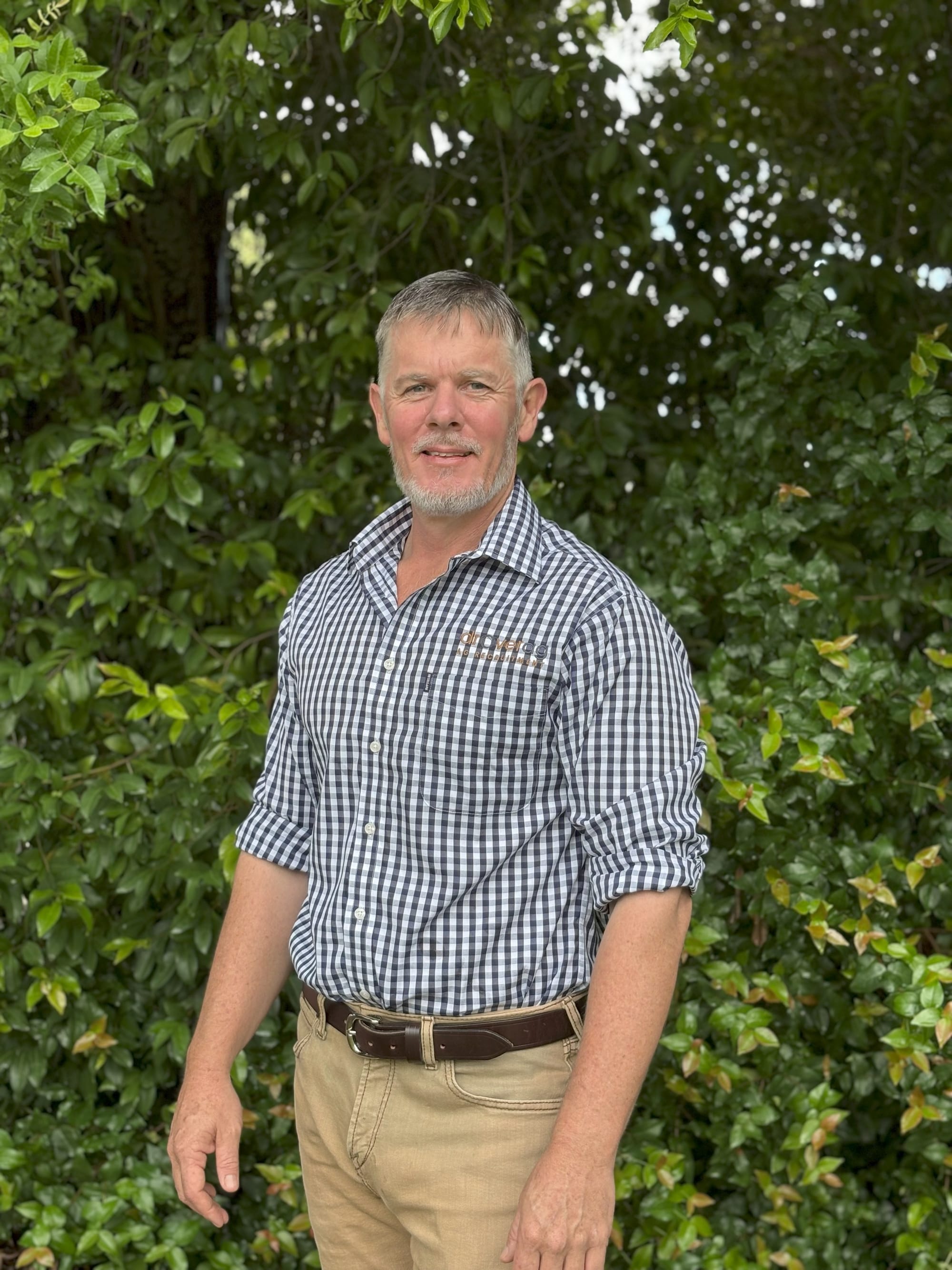
If you want to start the conversation about your next role or want to know more about our recruitment options, give me a call on 0428 245 261
Harvest Contractors Hit by Visa Delays as harvest looms - With the southern harvest window approaching rapidly, agricultural contractors are facing logistical hurdles due to delays in working visa approvals. The imbalanced season and slow processing times have left some harvesting fleets unable to fill machinery seats, forcing them to scale back operations. The NFF continues to press the federal government to improve visa processing times and develop practical, purpose-built agricultural workforce programs in consultation with regional employers. Read the full story on Grain Central
Search the best current opportunities in Agriculture, sourced directly from Drover Ag clients nationwide.
Weather
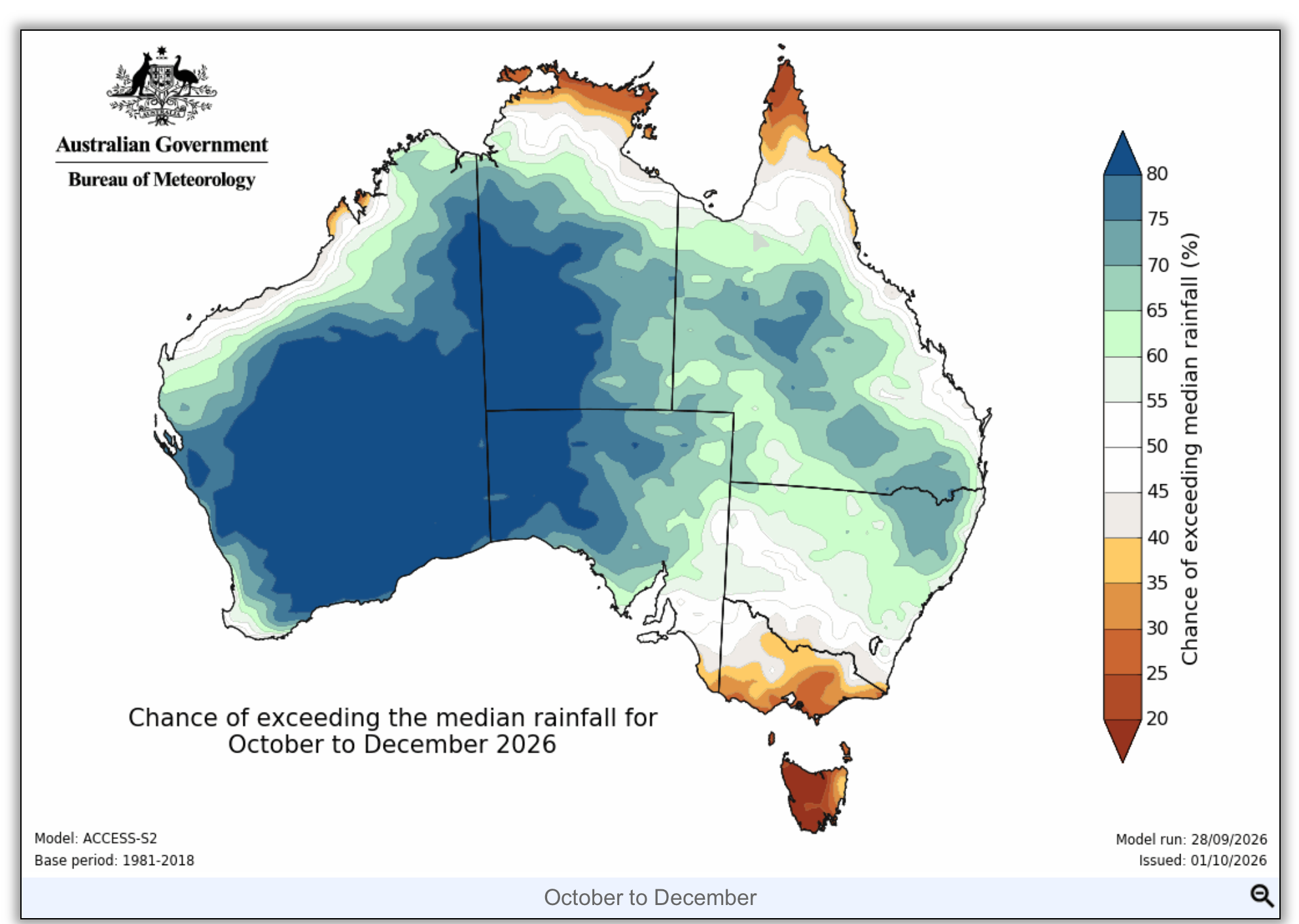
Long-Range Forecast: A Mixed Bag for end of 2026 — The Bureau of Meteorology has released its October to December 2026 long-range outlook, highlighting a split weather system for Australian producers. While much of the central and western regions are likely to see above-average rainfall, the far south-east and far north of the country are bracing for below-average totals. The good news is that much of the productive farming regions in the Eastern States will have average to above-average chance of exceeding median rainfall before the end of 2026 which is fantastic news for producers. View the detailed maps at the Bureau of Meteorology
The Battle for Prime Agricultural Land
Data Centres and Solar Farms Encroaching on Productive Farming Zones - The accelerating trend of large corporations acquiring productive agricultural land for massive data centres, transmission lines, and renewable energy projects continues to divide farming communities across the country.
As the digital economy’s footprint expands into rural areas—driven by the massive power and water needs of artificial intelligence infrastructure—agricultural advocates are demanding stronger legislative protections to ensure food and fibre security is not sacrificed for grid expansion.
- National Push: The National Farmers' Federation (NFF) is actively urging Canberra to treat agricultural land and critical supply chains more explicitly as "national interest assets." The NFF’s core policy insists that land-use decisions must recognise agriculture as a nationally significant industry and advocates strategic planning that respects the rights of farmers and regional communities.
- Victoria: The Victorian Farmers Federation (VFF) has been fiercely fighting recent state laws that allow transmission companies to access private farmland. VFF President Brett Hosking has sharply criticised the lack of genuine community consultation, noting that landholders are often kept in the dark until full project details are finalised. In a partial win for the sector, the state's newly released Sustainable Data Centre Action Plan explicitly prohibits new data centres in rural zones to protect productive agricultural land, with exceptions only for facilities co-located with existing critical energy infrastructure.
- Queensland: AgForce recently celebrated a "win for the bush" after lobbying the state government to shield farmland from sweeping land-access powers proposed in the Critical Minerals Bill. AgForce also continues to advocate strongly for mandatory decommissioning assurance schemes to ensure landholders aren't left with the clean-up bill when renewable energy projects reach the end of their life.
- New South Wales: Productive farmland, particularly in areas like the New England Renewable Energy Zone, is facing significant disruption from massive transmission corridors. NSW Farmers and rural advocates are demanding better consultation as multi-generational farms face being carved up by towers and renewable projects.
As the renewable and tech sectors expand, Australia's farming bodies are united in their demand: the transition must not come at the expense of the nation's prime agricultural land.
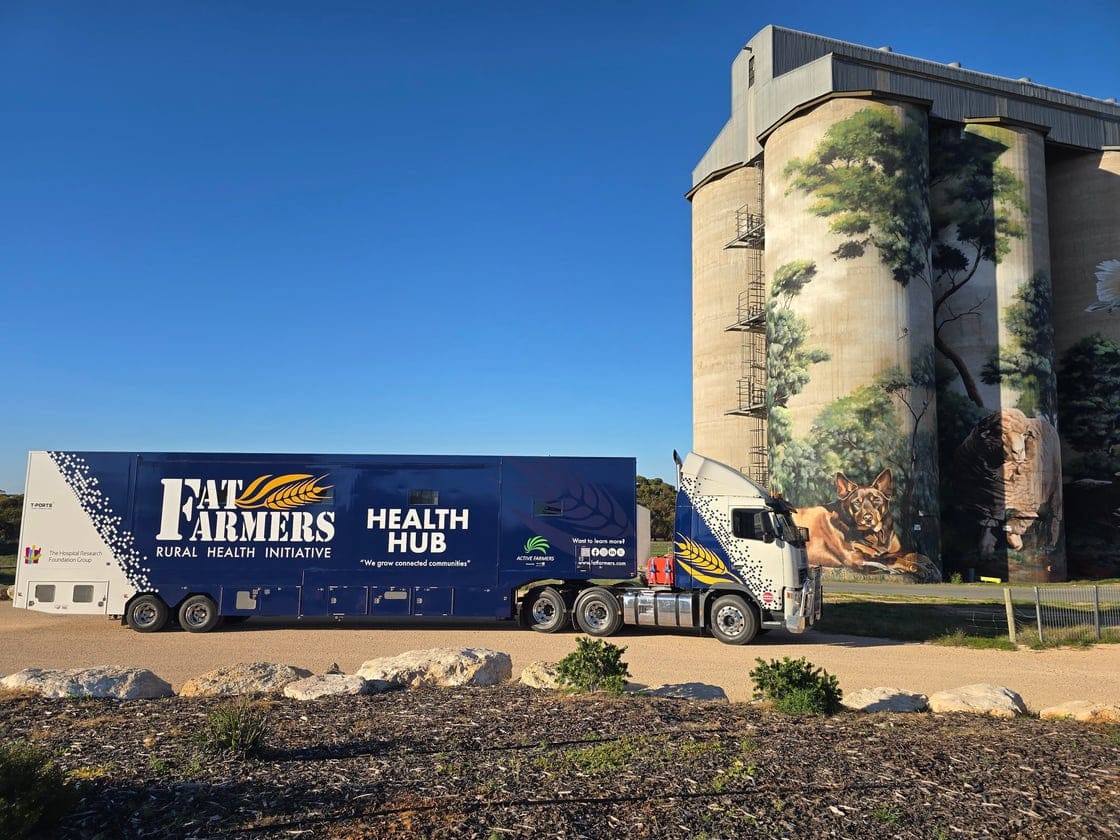
Have you heard about the Active Farmers and Fat Farmers movement?
Helping save lives in the bush - Active Farmers is dedicated to improving well-being in small rural communities through regular group fitness activities and engaging community events. They take a grassroots approach to tackle the critical issues of poor mental health and alarming suicide rates in rural Australia.
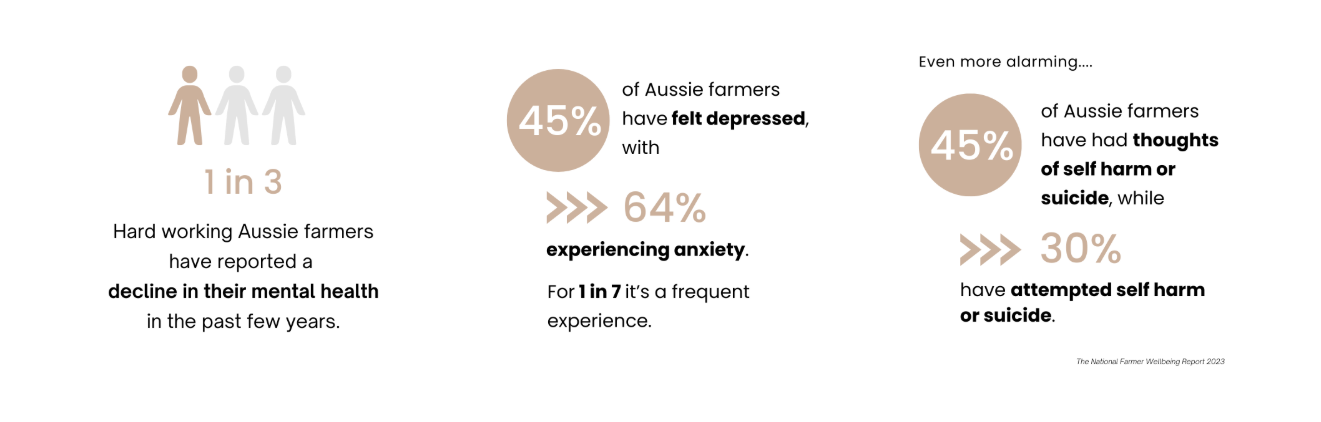
Fat Farmers Rural Health Initiative 's mission is to inspire and encourage rural communities to improve their health and well-being through physical activity.
Drover Ag is a proud supporter of Active Farmers and Fat Farmers. Get involved today!
Livestock and Dairy Markets
Beef Production to Hit Record 3 Million Tonnes - The Australian beef sector is operating at full throttle, with national production expected to exceed a record 3 million tonnes (carcass weight) in 2026. According to Meat & Livestock Australia’s September update, this surge is underpinned by a resilient national herd and historically high slaughter numbers. While the total herd size is projected to ease gradually to 29.7 million head by 2028, high productivity and strong processing throughput continue to sustain the current supply levels. Read the full projections in MLA's September 2026 Update. Or watch the video HERE
Solid Start to the 2026-27 Dairy Season - Australia’s dairy sector is maintaining positive momentum, with national milk output rising 4.0% year-over-year in July to kick off the new season. Recently revised historical data from Dairy Australia confirms the national supply bottomed out in 2022/23 and has been steadily increasing since. Favourable domestic conditions and a modest easing of private label milk prices at major supermarkets are helping to balance retail demand. Read the market analysis at the Milk Value Portal
WA Sheep Producers Secure Grants for On-Farm Finishing - As the Western Australian sheep industry prepares for the phase-out of the live export trade, government funding is flowing to support local infrastructure. Under Round 2 of the Supply Chain Capacity Program announced in September, 104 WA producers received grants to invest in on-farm finishing systems. The funding will directly support the construction of new or expanded feedlots and confinement feeding systems to improve productivity and supply chain efficiency across the state. Read the update from DAFF
Commodities
Global Disruption, Not Shortages, Driving Wheat Prices - Wheat prices are strengthening into late 2026, but the world is not actually short of grain. According to a new Rabobank report, current market strength is being driven by geopolitical risk and supply-chain disruptions. A 7-million-tonne reduction in Black Sea exports and ongoing disruptions in the Red Sea have forced grain onto longer, more expensive logistical routes. While this creates a massive freight advantage for Australian growers exporting into Asia—boasting an 8-to-10-day sailing time compared to 40 days for northern hemisphere competitors—the same geopolitical tensions are sharply driving up local production costs.
Rabobank warns that higher diesel and fertiliser prices continue to erode the benefit of stronger grain revenues. With fertiliser presenting a major budget risk due to multi-month lead times, growers are being urged to employ strictly disciplined risk management. Adding to the complex outlook, the potential emergence of El Niño in 2027 could further lift eastern Australian wheat prices if it triggers the typical reduction in winter rainfall and crop yields. Read the full release on Rabobank
Confidence Stages a National Recovery
Rural sentiment has bounced back across all Australian states heading into the final quarter of 2026 according to Rabobank. The latest rural confidence index revealed that optimism surrounding commodity markets and seasonal conditions has lifted the mood of the sector. Despite ongoing input cost pressures, this improved confidence has translated into stronger on-farm investment intentions for the next 12 months. Read more from Rabobank

Drover Ag's remote ag recruitment is powered by Starlink. Get amazing internet from Starlink to power your rural business using the link below. Get one month of free service applied to your second month when you sign up for Residential or Roam through this unique link.