Ag Newsletter - 30 July 2026

Livestock Markets:
Queensland Underpins Cattle Throughput as Winter Processor Closures Slow Slaughter - MLA’s weekly market analysis reports a 9% drop in national cattle yardings to 67,283 head, with Queensland saleyards supplying 45% of total throughput. The Restocker Yearling Steer Indicator held relatively stable at 531¢/kg liveweight (lwt), backed by steady northern demand.
In the sheep sector, weekly lamb yardings fell 12% to 126,578 head as seasonal winter processor shutdowns temporarily reduced plant capacity. National lamb slaughter dropped 7% week-on-week to 311,172 head, while mutton slaughter remained steady at historically low throughput levels. Source: Meat & Livestock Australia (MLA) Market Reports
Feature Article
Why 'Low-Stress Staff Handling' is the Key to Solving Ag's Workforce Challenge - Every Australian producer knows the rules of low-stress stock handling: yell, rush, and pressure your livestock, and the whole draft grinds to a halt.
So why do we so often apply high-stress handling to our people? At the LambEx conference, Drover Ag’s Recruitment Manager, Bec Vickers, introduced a game-changing concept for farm employers: "Low-Stress Staff Handling." Drawing on over a decade of recruitment experience and a practical background in commercial cattle, Vickers outlined how changing the way we handle people solves the retention cycle.
Perfect the "Human Match" - Top-tier candidates don't just look at salary or machinery—they vet the culture and lifestyle prospects of a new job opportunity.
Culture Over Skill: Skills can be taught; lifestyle and culture misalignment is more difficult.
The Big Picture: Consider work opportunities for partners, local schooling, and social proximity. If a candidate loves the gym and town sports, placing them 90 minutes from town is a ticking time bomb.
Provide a Trajectory, Not a Dead End - High performers rarely leave a stable job just to do the exact same role down the road for a slightly higher rate. They move for growth, trust, and career progression.
Map out clear pathways, whether through formal training, expanding authority over breeding or cropping decisions, or clear steps toward management.
The Warning: If you promise a career pathway to get someone through the gate, you must deliver—otherwise, you create a revolving door.
Communicate Before the Gate Breaks - If the only time your team hears from you is when a tractor is damaged or a gate is left open, they will operate in a constant state of defence. In ag, "silence isn't compliance"—it's often a sign an employee is updating their resume.
Implementing low-stress handling means establishing regular, predictable communication. Something as simple as a 10-minute Monday morning toolbox talk over coffee keeps the team aligned, lowers stress, and builds long-term trust.
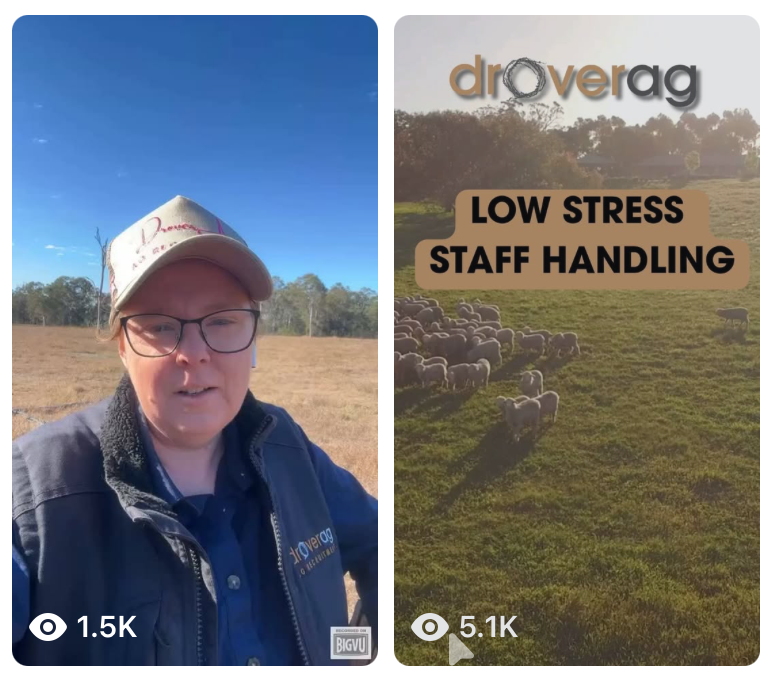
📲 Stay tuned! Follow our social media pages for the next instalment in our low stress workforce series.
Dairy Business Management:
Performance Benchmarking Drives Farm Stability - Dairy Australia has highlighted how commercial dairy operators are using data analytics to navigate input cost volatility and build resilient farm businesses. Case studies tracking multi-generational enterprises—such as robotic dairy operations milking 750 Holsteins—demonstrate the value of utilizing benchmarking platforms like DairyBase and the Dairy Farm Monitor Project (DFMP).
By maintaining precise oversight of pasture growth, dry matter intake per cow, and cost of production per kilogram of milk solids prior to finance costs, farm managers gain the clarity needed to make strategic capital investments and maintain profitability during tighter margin cycles. Source: Dairy Australia News
Global Grain Markets:
Black Sea Escalation and Northern Heatwaves Support Wheat Values - Grain Central's daily market reporting indicates that global wheat futures rallied above US$7/bushel as renewed military conflict in the Black Sea disrupted Russian export loading facilities and Ukrainian maritime transport lanes. Concurrently, persistent summer heatwaves across Western Europe have driven down French wheat and rapeseed yield expectations. For Australian broadacre producers, offshore supply disruptions continue to support domestic bids, particularly as domestic feed buyers in Eastern Australia factor in local seasonal risks and subsoil moisture budgets. Source: Grain Central Daily Market Wire
International Trade & Policy:
MLA Clarifies US Tariff Announcement; Australian Beef Exempt Under FTA - Following the United States Government's announcement of a revised 12.5% tariff structure on selected agricultural imports, Meat & Livestock Australia (MLA) Managing Director Michael Crowley issued an official industry briefing.
Crucially, Australian beef remains 100% exempt from the new measures, maintaining the 0% tariff arrangement secured under the bilateral free trade framework in late 2025. However, Australian sheepmeat and goatmeat exports will be subject to the 12.5% rate. MLA's Washington D.C. team is actively engaging with U.S. trade representatives and federal officials to evaluate market impacts and support red meat exporters supplying Australia's largest export destination. Source: Meat & Livestock Australia (MLA)
Weather & Climate:
Cold Fronts Deliver 15mm to 50mm Across Southern Cropping Belts -The Bureau of Meteorology’s (BOM) weekly rainfall report for the period ending July 27, 2026, tracked a series of cold fronts and low-pressure troughs moving across southern and eastern Australia. Weekly rainfall totals between 15mm and 50mm were recorded across south-eastern South Australia, southern and north-eastern Victoria, and southern Tasmania, with western Tasmania receiving localised falls exceeding 100mm. Cold fronts brushing south-western Western Australia brought 15mm to 25mm across winter cropping belts, keeping subsoil moisture profiles in reasonable condition as crops progress through early development. Source: Bureau of Meteorology (BOM) Weekly Rainfall Archive
Long-Range Outlook Tracks Ocean Warmth and Spring Trends - The Bureau of Meteorology’s (BOM) latest long-range climate update notes that global Sea Surface Temperatures (SSTs) remain exceptionally high. Ocean-atmosphere patterns across the Pacific continue to influence long-range climate signals, pointing toward warmer-than-average daytime temperatures across much of southern Australia heading into early spring.
While winter cold fronts have delivered scattered moisture across Western Australia, South Australia, and Victoria, the Bureau emphasizes that subsoil moisture management remains critical for dryland cropping and grazing operations in regions tracking near-to-below-average rainfall expectations. Source: Bureau of Meteorology (BOM) Climate Outlooks
Search the best current opportunities in Agriculture, sourced directly from Drover Ag clients nationwide.