Ag Newsletter - 29 May 2026

Weather:
Substantial May Deluge Recharges Regional Soil Profiles - A rapid succession of low-pressure systems has delivered a critical moisture boost across key Australian agricultural zones, putting this May on track to become one of the wettest in decades in some areas and temporarily defying an impending El Niño.
While the rainfall represents a timely, traditional autumn break for southern producers, the heavy totals have been highly unseasonal further north. In New South Wales, Dubbo has recorded 134mm so far (poised for its wettest May since 1983), while Queensland’s far-western Urandangi registered an unseasonal 67mm (its highest May total since 1968). Down south, the standard seasonal break was heavily amplified, with Victoria's Walpeup hitting 68mm (since 1992) and South Australia's Renmark reaching 123mm (since 1889). In Western Australia, an Indian Ocean cloudband brought a welcome 20mm+ opening to the Central West cropping lines.
A powerful fourth low is forecast to sweep across the Great Australian Bight early next week, with weather models indicating at least another 15mm of rain for agricultural zones in SA, Victoria, and southern inland NSW before June. While long-range winter forecasts still maintain a dry El Niño signal, these substantial late-autumn totals provide an invaluable subsoil moisture buffer for crop establishment and pasture growth. Source: ABC News / BOM
Beef:
Squeezed Margins and Shifting Demands: The Global Beef Processing Challenge - The beef processing sector is navigating intense margin pressure and evolving consumer demands, with structural costs ballooning both domestically and abroad.
In Australia, the cost to process a typical beef animal has skyrocketed from roughly $360 a head a decade ago to $530.80 today—a 47% increase driven by transport, utilities, and packaging (Beef Central). These operational struggles are mirrored internationally; severe cattle supply shortages have handed US packers heavy financial losses, with Tyson posting $240 million in losses and JBS reporting negative EBITDA of $113 millionin their latest first quarters (Beef Central).
In response to global economic tightening, Australian supply chains are pivoting toward more economical, lower-marbling Wagyu brands. Major players like AACo (with its 1824 brand) and Hancock Agriculture (Kidman Premium) are targeting approachable marbling scores of 2–5, offering consumers high-quality, traditional steak portions at a lower price point and lower production costs than ultra-premium lines (Beef Central).
Fertiliser:
The Synthetic Reality: Why Australian Broadacre Farming Can't Drop Urea Yet - Geopolitical instability and the closure of the Strait of Hormuz have sent imported fertiliser prices soaring, forcing Australian farmers to closely re-evaluate their reliance on imported inputs. With Australia importing roughly 60% of its urea from the Middle East, the supply squeeze has sparked renewed interest in biological alternatives.
While some producers are finding success integrating natural supplements, multi-species pastures, and nitrogen-fixing legumes like white clover, scaling these long-term biological approaches to meet immediate commercial demands is a major hurdle.
For most broadacre and commercial enterprises, synthetic inputs remain non-negotiable. Independent agronomist Chris Cheek* notes that without synthetic fertiliser, many crops would yield well below the financial break-even point. Alternative organic inputs—while effective—are often finite, difficult to balance, difficult to spread and expensive. Burdened by heavy debts and facing consumers unwilling to pay a premium, Australian farmers remain structurally bound to synthetic fertilisers to guarantee viable yields. *Source: ABC News
 Megan Boote
CGT Changes Loom:
Farmers Disappointed by Lack of Commitment on CGT Thresholds - The National Farmers’ Federation (NFF) has expressed its disappointment following the Federal Government’s introduction of new tax reform legislation, which failed to explicitly commit to reviewing outdated small business Capital Gains Tax (CGT) concession thresholds.
While the Government indicated that this is only the first tranche of legislation and the Treasurer acknowledged that stakeholders have raised the CGT issue, the NFF argues that leaving the thresholds untouched creates ongoing uncertainty for family farm successions and long-term investment.
NFF President Hamish McIntyre stated that the Federation stands ready to engage in further consultation to protect family farming operations. "The Government still has time to get this right, but the message from agriculture is clear: The last thing this country should be doing is making it harder for the next generation to stay on the land," he said. Source: National Farmers' Federation
Events:

Visit the Fat Farmers Heath Hub Truck at Barmera Sheep Dog Trials June 6–7, 2026, Barmera Club, SA. Free SiSU Health Hub checks for attendees. BOOK NOW
Mitchell Power Memorial Quick Shear June 20, 2026, Imperial Hotel, Bombala, NSW. Drover Ag is a proud sponsor of the annual shearing competition, celebrating the life of Mitch Power and raising awareness for rural mental health and suicide prevention. View Details
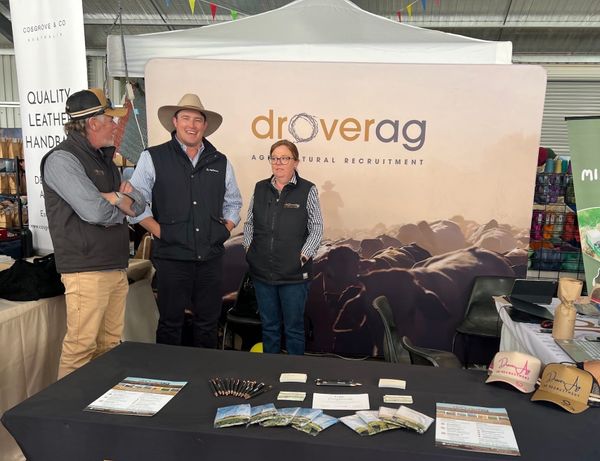
3. LambEx 2026 - July 7–10, 2026, Adelaide Convention Centre, SA. Australia’s premier biennial sheep, lamb, and wool conference, featuring industry speakers, the AMPC Carcase Showcase, and the Coles Trailblazers emerging leaders program. Come and meet the Drover Ag Team Program and Details
Missed our latest article? Read Now
John Boote