Ag Newsletter - 23 June 2026

With the winter solstice now behind us, we have passed the shortest day of the year, and the steady journey toward spring has begun. For many producers, it has been a notably mild and wet winter so far, with little to no sign of the much-discussed El Niño materialising across most regional areas. The welcome moisture has provided an excellent start to the season for both cropping and pasture development.
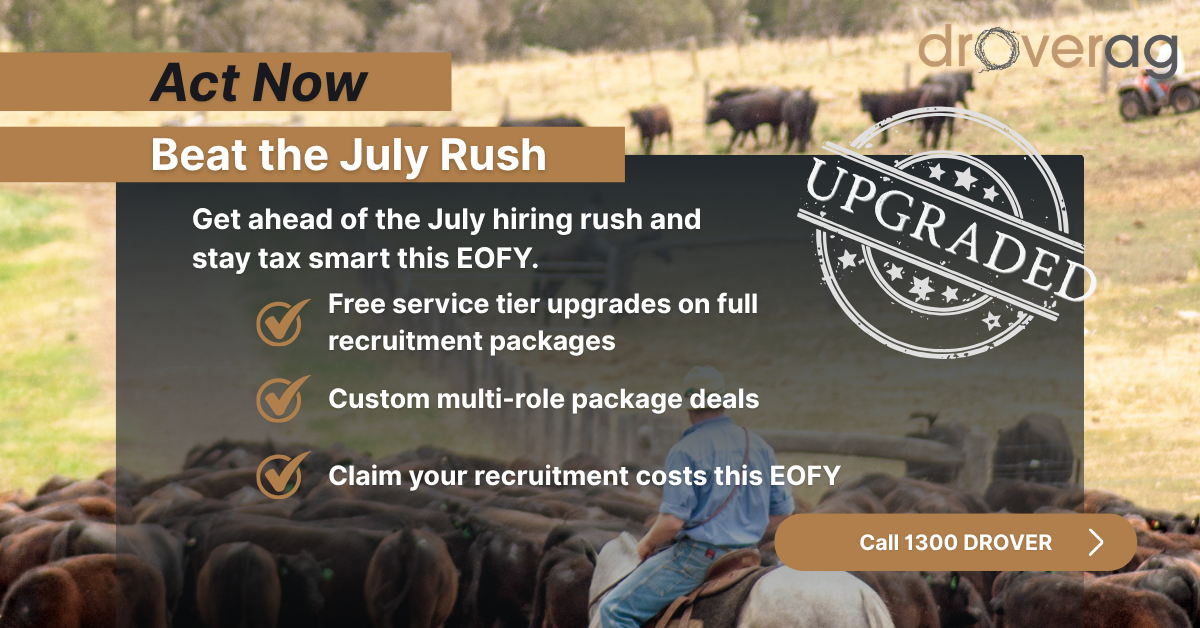
As the End of Financial Year (EOFY) is now only a week away, its the perfect time to take advantage of the Drover Ag EOFY Deal. If you lock in a full Recruitment package before the end of the financial year, we will automatically apply a Free Service Tier Upgrade, plus ask us about our package deals.
Click here to claim the EOFY deal and beat the July hiring rush.

Beef:
Angus Feeder Prices Surge as Grass Fever Spreads to Processors - Angus feeder cattle prices have continued a steep upward trajectory over the past fortnight, driven by intense competition among feedlots scrambling to keep pens full. Widespread late-autumn and early-winter rainfall across the eastern states has generated severe "grass fever," with restockers outbidding traditional buyers to secure cattle for paddock finishing. This supply-and-demand mismatch has forced lot feeders to aggressively raise buy-orders to lock in numbers, with prominent operations like the Yarranbrook feedlot near Inglewood experiencing rapid price movements on high-quality, heavy feeder lines. Source:Beef Central
Cropping:
Fertiliser Supply Chain Boosted as Southern Belts Record Excellent Rain Following a fantastic winter drenching across Australia's southern grain belts, growers have received a supply chain boost just in time for top-dressing. The first 47,250-tonne shipment of urea secured under the Federal Government’s Fuel and Fertiliser Security Facility has officially docked in Brisbane. The cargo from Indonesia is the first instalment of a 250,000-tonne supply deal negotiated between Incitec Pivot and PT Pupuk Indonesia. Meanwhile, Nutrien Ag Solutions has opened its new $30 million East Coast Manufacturing and Distribution Centre in Laverton North, Victoria. The purpose-built facility effectively triples Nutrien's domestic manufacturing capacity for formulation and blending, offering southern growers much shorter delivery times and easing historic reliance on freight to Western Australia. Source: Grain Central
Transport:
Livestock Transporters Welcome Gradual End to Fuel Excise Cuts - The Australian Livestock and Rural Transporters Association (ALRTA) has cautiously welcomed the Federal Government's decision to stagger the reinstatement of the fuel excise and heavy vehicle road user charge. Instead of ending the current 32-cent-per-litre cut abruptly next week, the government will halve the cut to 16 cents per litre in July before returning to the full tax rate in August. Transport industry commentators note it will help manage demand and avoid a sudden price shock at the bowser.
While the rollback is expected to increase freight rates by approximately 5%—assuming wholesale fuel prices remain stable—the situation underscores the agricultural supply chain's absolute reliance on diesel, as heavy transport is not yet ready to transition to electric vehicles to keep essential supermarket shelves stocked. The plan's long-term success will depend heavily on the stabilisation of global oil markets amid ongoing tensions in the Middle East. Source: Beef Central
Biosecurity:
Vigilance Critical Following H5 Bird Flu Detection in WA - The National Farmers' Federation (NFF) is urging producers to review on-farm biosecurity following the confirmation of H5 avian influenza in two wild seabirds in Western Australia. NFF President Hamish McIntyre described the situation as serious but manageable, highlighting the need to protect against "cross-species risks across livestock industries." A major concern with the current globally spreading H5 strain is its ability to infect mammalian species; while primarily an avian disease, the possibility of mammal-to-mammal transmission cannot be ruled out. Given this broader threat to both avian and mammalian livestock, the NFF stresses that preparedness is the industry's strongest tool, advising all farms to strictly monitor access to their property and report any sick animals to the Emergency Animal Disease Hotline. Source: National Farmers' Federation (NFF)
Rural Events Events Calendar
July
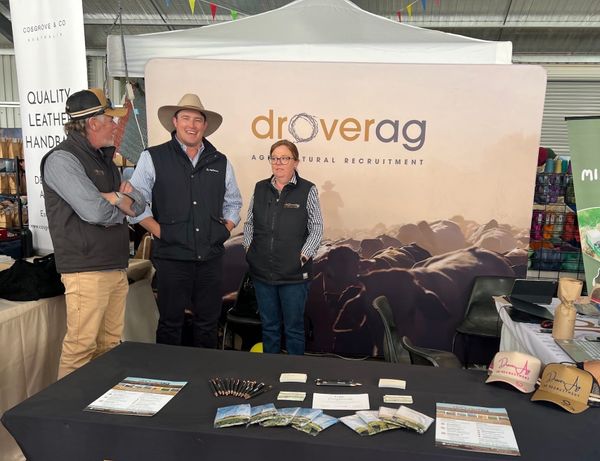
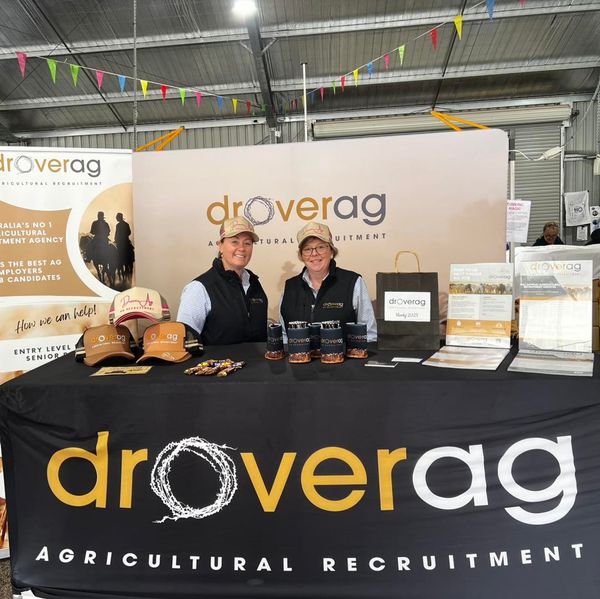
- LambEx 2026 - July 7–10, 2026, Adelaide Convention Centre, SA. Come and meet the Drover Ag Team Program and Details
- Mudgee Small Farm Field Days: July 10–11 (Mudgee, NSW)
- Australian Sheep & Wool Show: July 17–19 (Bendigo, VIC)
August
- Sheepvention Rural Expo: August 2–3 (Hamilton, VIC)
- Mallee Machinery Field Days: August 5–6 (Speed, VIC)
- AgQuip Field Days: August 18–20 (Gunnedah, NSW)
September
- Newdegate Machinery Field Days: September 2–3 (Newdegate, WA)
- Riverland Field Days: September 18–19 (Barmera, SA)
- Henty Machinery Field Days: September 22–24 (Henty, NSW)
October
- Elmore Machinery Field Days: October 6–8 (Elmore, VIC)
- Wandin Silvan Field Days: October 16–17 (Wandin, VIC)
- Australian National Field Days (ANFD): October 22–24 (Borenore, NSW)
Latest NEW jobs from the Drover Ag Jobs Board
- Experienced Farm Hand - Cropping & Cattle | Banana, Qld APPLY NOW
- Farm Manager - Mixed Livestock & Cropping | Young, NSW APPLY NOW
- Manager - Specialist Wagyu Feedlot | Darling Downs, Qld APPLY NOW
- Farm Hand - Mixed Cropping & Livestock | Young, NSW APPLY NOW
View all the latest jobs on the Drover Ag Jobs Board